
Effectively prevent
shipping container condensation

The Problem: Condensation in Containers

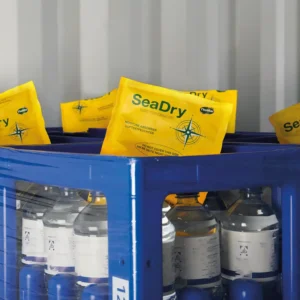
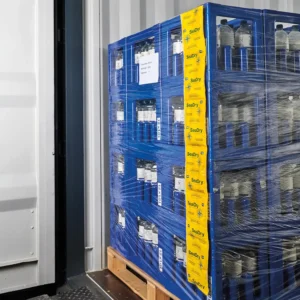
The Solution: SeaDry Container Desiccants

Using our specially manufactured desiccants, humidity in the container is reduced,
effectively preventing the formation of container condensation and
associated damage.

Why condensation forms in containers

During transport and storage, significant temperature fluctuations occur inside freight containers. Not only at ports and rail terminals located in different climate zones, but even during storage at a fixed location, temperature differences of several dozen degrees Celsius can occur between day and night. Since warm or hot air can absorb much more moisture than cold air, temperature drops in hermetically sealed freight containers lead to the formation of condensation and thus to phenomena such as container condensation, container rain, and cargo sweat.

Moisture in containers?
No chance!

Trust in more than 25 years of experience from the desiccant specialists at ThoMar.

What is what: Container rain, container condensation, cargo sweat

Condensation in containers can appear in different forms. Experts in cargo hold meteorology distinguish between the terms container condensation, container rain, and cargo sweat.

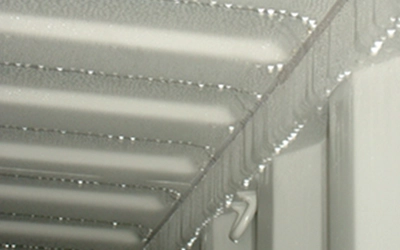
Container Rain: Condensation on Ceiling and Sides of a Transport Container

What is Container Rain?

So-called container rain refers to condensed water that forms on the interior surfaces of the container. The water deposited there concentrates through surface tension into increasingly larger droplets, which then drip down due to their weight. The resulting container rain then falls directly onto the cargo.

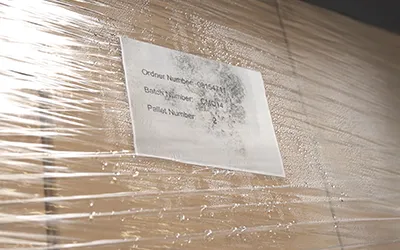
Cargo Sweat: Condensation Behind Stretch Film on Transport Boxes

What is Container Condensation?

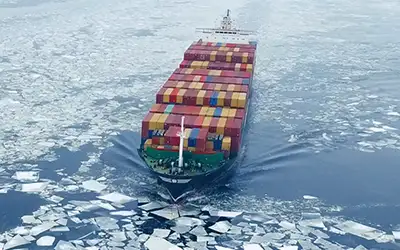
Container condensation caused by falling external temperatures typically occurs under the ceiling of the container. This effect is caused when the container wall cools significantly during transport to colder regions or during nighttime temperature drops due to cold ambient air. The moisture is thereby drawn out of the significantly warmer air in the container and collects on the ceiling and walls of the container.

Container Condensation Symbolic Image with Container Ship in Arctic Ocean

What is Cargo Sweat?

So-called cargo sweat forms during transport from colder to warmer environments or when a shipping container that has cooled overnight warms up due to solar radiation. When the air in the container heats up faster than the cargo, moisture from the air condenses under these conditions on the surface of freight goods, packaging, and packing materials.

SeaDry container desiccants protect your cargo from condensation

Potential damage from condensation in containers

Condensation in containers can lead to a variety of damage. Both container condensation and cargo sweat can cause corrosion and rust on transported goods, mold on packaging and goods, as well as softened cardboard boxes and detached labels.

Corrosion / Rust on Transported Goods

When condensation forms in containers, there is a particularly high risk of corrosion for cargo components made of steel. This applies both to material shipped for industrial further processing and to finished end products. To prevent transported goods from being affected by rust and possibly destroyed during sea freight, condensation must be effectively and safely absorbed.

Close-up Rust on Metal
Condensation in containers leads to rust on transported goods made of steel.

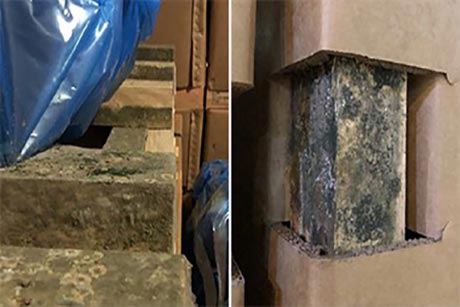
Particularly in the food industry, the formation of mold during transport must be avoided at all costs. However, if no suitable countermeasures are taken in the container, cargo or container condensation occurring at sea quickly creates a climate in which mold can form on packaging and goods and spread rapidly.

Mold Formation on Packing Materials
Condensation in containers promotes mold formation on packaging and goods.

Even if the cargo cannot rust and is relatively insensitive to mold, it can be severely damaged and even rendered unusable by condensation in the freight container. Through moisture condensing directly on packaging materials from the ambient air or container rain falling from the container ceiling, cardboard boxes can become completely softened and labels detached at sea.

Softened Packaging Due to Container Condensation

Damage from condensation?
Take precautions!

Rely on SeaDry high-performance desiccants from ThoMar – Made in Germany.

How to successfully dehumidify containers

The conditions under which moisture in containers becomes a serious problem and can cause devastating damage to cargo are very diverse. Therefore, it is very important to first determine very precisely the respective need for countermeasures, and then in a second step to proceed as specifically and effectively as possible against shipping container condensation.

ThoMar process steps for optimal desiccant use

SeaDry Desiccant Selection Process: Step-by-Step Analysis Chart

Step 1: Analysis

Determine Precise Need for Countermeasures

The need for suitable measures against the formation of condensation during container transport depends on a multitude of factors. From the transported goods to the climate zones served, container size, weight and moisture content of the goods, to the packing materials used, storage and transport duration, and other parameters, an extremely large number of aspects play a role here. For this reason, the individual need for a specific application can only be determined in cooperation with experts in container dehumidification.

SeaDry: Choosing the right desiccant – Step: Product selection

Step 2: Product Selection

Prevent Shipping Container Condensation with Desiccants

Against condensation in containers, we offer exclusively desiccants manufactured in our own production in Germany. We place great emphasis on maintaining the highest standards with regard to product quality and working conditions. For optimal effectiveness of the means used for container dehumidification, the spatial conditions in the loaded container must be taken into account. For this reason, we train our customers’ employees so that they can optimally select and place desiccants in every application.

SeaDry desiccant process step knowledge transfer diagram

Step 3: Knowledge Transfer

Effectively Combat Condensation in Containers

For the formation of condensation in containers to be effectively and safely prevented, not only must the appropriate desiccants be used in the right quantity. We offer our customers genuine all-round service for container dehumidification: individual needs analysis, expert consultation, targeted product selection, and intensive training. We conduct test series as needed, examine the complete logistics process, and provide practical assistance for optimization. The goal is always 100% effectiveness of all measures.

Get expert advice now!

Briefly describe your application to us. We will contact you with a suitable recommendation for your container dehumidification.

    How can we best reach you?

    Would you like to send us files?
    (e.g. tenders, requirement specifications, etc.)

    Please select PDF or jpeg | jpg files. Maximum file size 5 mb.

    Made in Germany: Certified quality from the Duchy of Lauenburg

    ThoMar Management
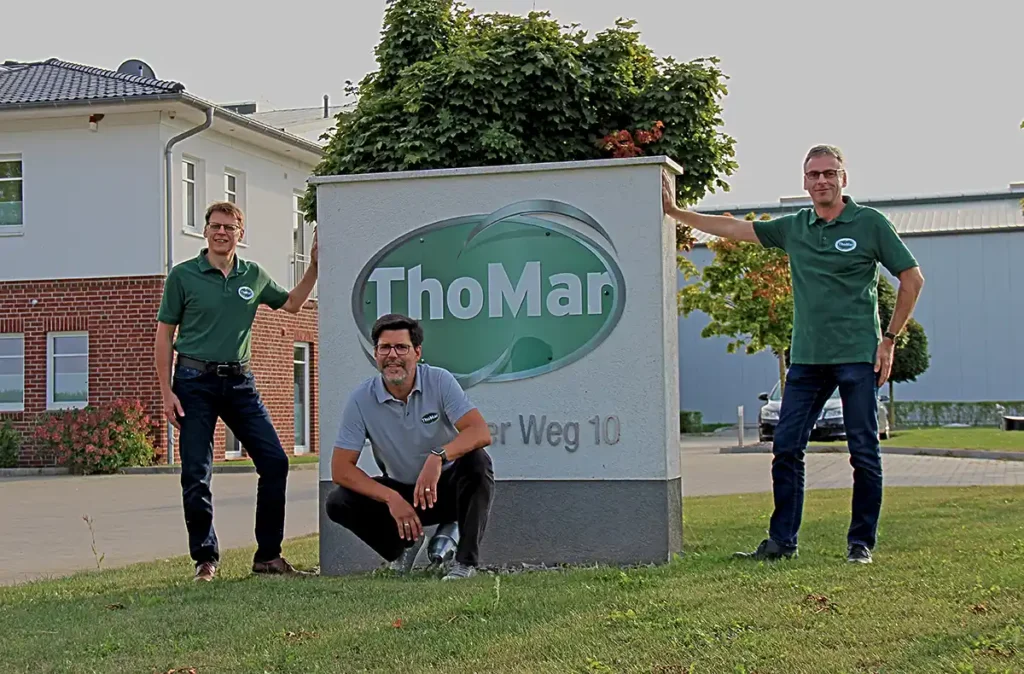
    Management ThoMar OHG (from left): Thomas Möller, Daniel Schuback, Martin Möller

    ThoMar OHG has more than 25 years of experience in the production and trade of desiccants. We produce our container desiccants exclusively at our German location in the Duchy of Lauenburg at the gates of Hamburg. We ensure compliance with the highest standards with regard to ingredients and packaging materials, product quality, and the protection of our employees. Throughout Europe, we supply industry and wholesale directly from the factory. ThoMar OHG has been certified according to ISO 9001 for the development, manufacture, and distribution of desiccant bags and air dehumidifiers since 2012. In our B2B online shop, desiccants can also be ordered in smaller quantities.

    Order container desiccants directly:

    In the ThoMar B2B desiccant shop, you can also order SeaDry products directly.

    A selection of our satisfied customers:

    0
    Your cart
    Your cart is emptyContinue shopping

    Our experts will be happy to help you

      How can we best reach you?

      Would you like to send us files?
      (e.g. tenders, requirement specifications, etc.)

      Please select PDF or jpeg | jpg files. Maximum file size 5 mb.
      Welcome to the new ThoMar B2B Shop

      Did you already have a customer account with ThoMar? Your account and stored data have been migrated.

      Before your first login, you only need to set a new password for your existing email address once.

      Login

      Register

      A link to set a new password will be sent to your email address.