


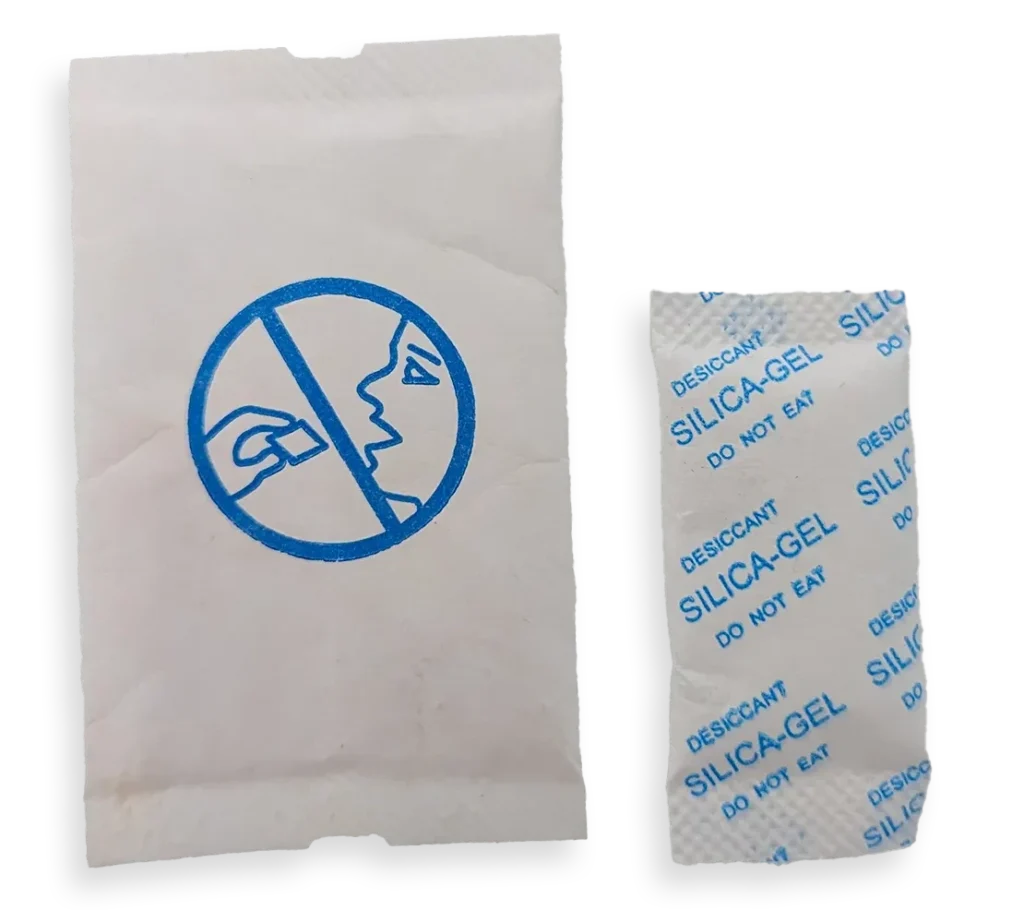
Right: 1 g standard desiccant bag
Home > Pharma & Food > Case study: blister packaging inserts
Packaging blister products in aluminium composite bags places special demands on moisture protection and process reliability. Especially at high cycle rates, standard solutions quickly reach their limits. In this case study, we show how we worked with a ThoMar Pharma customer to develop a suitable solution.
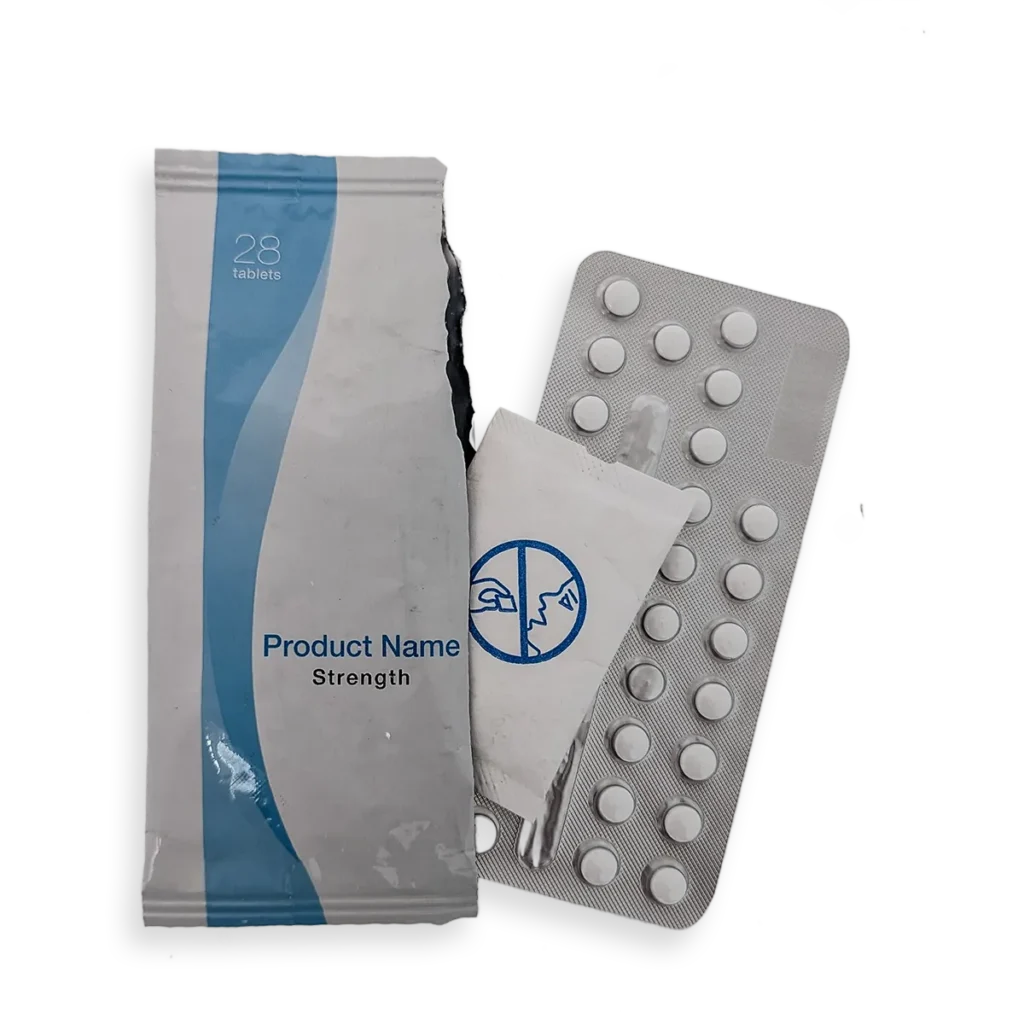
A blister pack with a 1 g silica gel desiccant bag placed on top is packed airtight in an aluminium composite bag. Several of these aluminium bags are then stacked and inserted into a cardboard box.
The customer processes our desiccant bags on a roll using a high-speed bag separator in continuous operation. Feeding into the downstream processing system takes place at more than 200 cycles per minute.
Standard desiccant bags are significantly smaller than the blister pack and irregularly shaped. This makes the stack of aluminium bags unstable and crooked, and it can no longer be inserted into the box automatically.
To develop the optimal product for the application described, the ThoMar project manager visited the customer on site to get a detailed picture of the processing machines. In the next step, customised samples were provided for testing.
Use of a larger desiccant bag that is very flat. Very fine silica gel is used for this, which is evenly distributed in the bag.
The bags are wound very tightly into a bag chain so that the individual bags remain flat.
Did you already have a customer account with ThoMar? Your account and stored data have been migrated.
Before your first login, you only need to set a new password for your existing email address once.